We are seeking funding to undertake the following programmes:
Project Title: Rebuilding Resilience to Fight Situational Poverty Among Landslide Survivors through Livestock: A sustainable path out of poverty.
Uganda’s lush landscapes and rolling hills have long been a source of pride and beauty, but beneath the surface lies a deadly threat. Landslides have ravaged communities, sweeping away homes, livelihoods, and loved ones. Survivors are left to pick up the pieces, their lives forever changed by the devastating power of nature.
Resettlement is often touted as a solution for families displaced by landslides, but for many in Uganda, it’s a fate worse than the disaster itself. Even after being relocated to new areas, these families continue to suffer from poverty, lack of food, limited access to education, and inadequate healthcare facilities. The struggles begin from the moment they arrive at their new ‘home’, as it is characterized by inadequate housing because families are forced to live in makeshift shelters or cramped, poorly ventilated homes that offer little protection from dangerous elements, limited access to basic services as resettlement areas often lack functional schools, healthcare facilities, and clean water sources, exacerbating the vulnerabilities of displaced families.
“Rebuilding Resilience to Fight Situational Poverty among Landslide Survivors through Livestock: A sustainable path out of poverty” is an initiative that is intended to salvage the landslide survivors out of situational poverty by providing small-scale dairy cows and the necessary support to start up their small-scale dairy farms for economic sustainability.
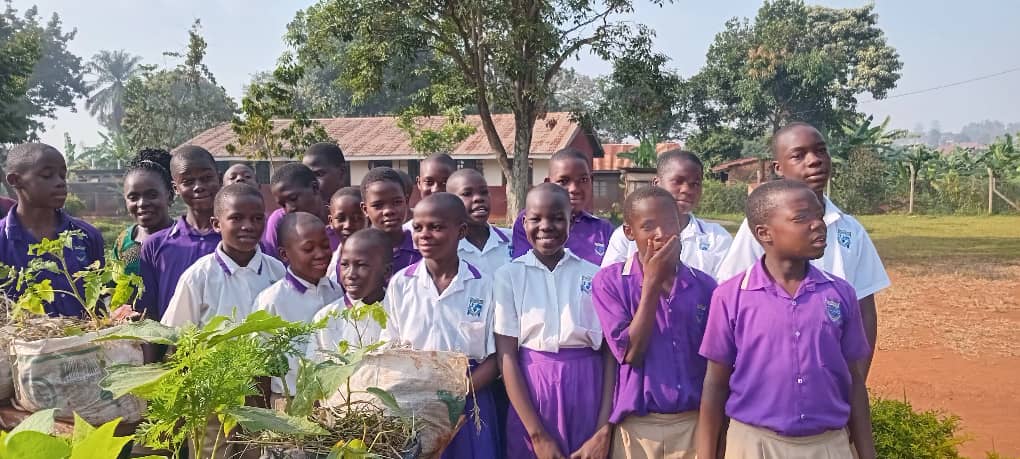
Project title: PEER TO PEER LEARNING IN LOWER PRIMARY SCHOOLS IN RURAL GOVERNMENT SCHOOLS IN UGANDA.
Peer to peer learning is a learning methodology that improves students learning environment and learner achievements. Peer to peer learning is designed to address the issue of education stakeholders in rural government schools leaving all the learning to teachers and school setting only. The lack of additional effort outside of school causes the learners to obtain very little of the knowledge needed. Parents in this setting leave all the work to teachers who are already overwhelmed by the high teacher – pupil ratio and insufficient contextually relevant teaching – learning resources.
Peer to peer learning is designed to allow children to have peers who are better in class to conduct more learning tasks with their colleagues during weekends and holidays. It involves learners making groups of around five members who live in the same coming together and collaboratively learn or make research on a given task.
CREEP intends to design numeracy and literacy work books together with teachers of the learners in rural government schools. The proposed workbooks will contain tasks from classroom-based lessons. The workbooks will complement exercises and illustrations given by teachers and be a basis to test as well as improve comprehension levels of learners.
Model parents and village local council executives will be nominated to help in management of discipline of the children as they interact in their respective communities outside school.