We offer capacity building and training in:
Entrepreneurship Education for Students in POST PRIMARY Education Institutions
Over 20.1 million of Uganda’s population of 45.9 million, are in the age bracket of 15 – 24 years of (UNPC, 2024) hence are still in post primary institutions and less productive to themselves, their families and the country. After graduation, they are faced by wide spread unemployment estimated at 83% (AFDB, 2016). Consequently, the country is unable to produce sufficient number of jobs for graduates entering the job market every year. Under the circumstances, entrepreneurship skills development for those still in education institutions is an answer to this challenge.
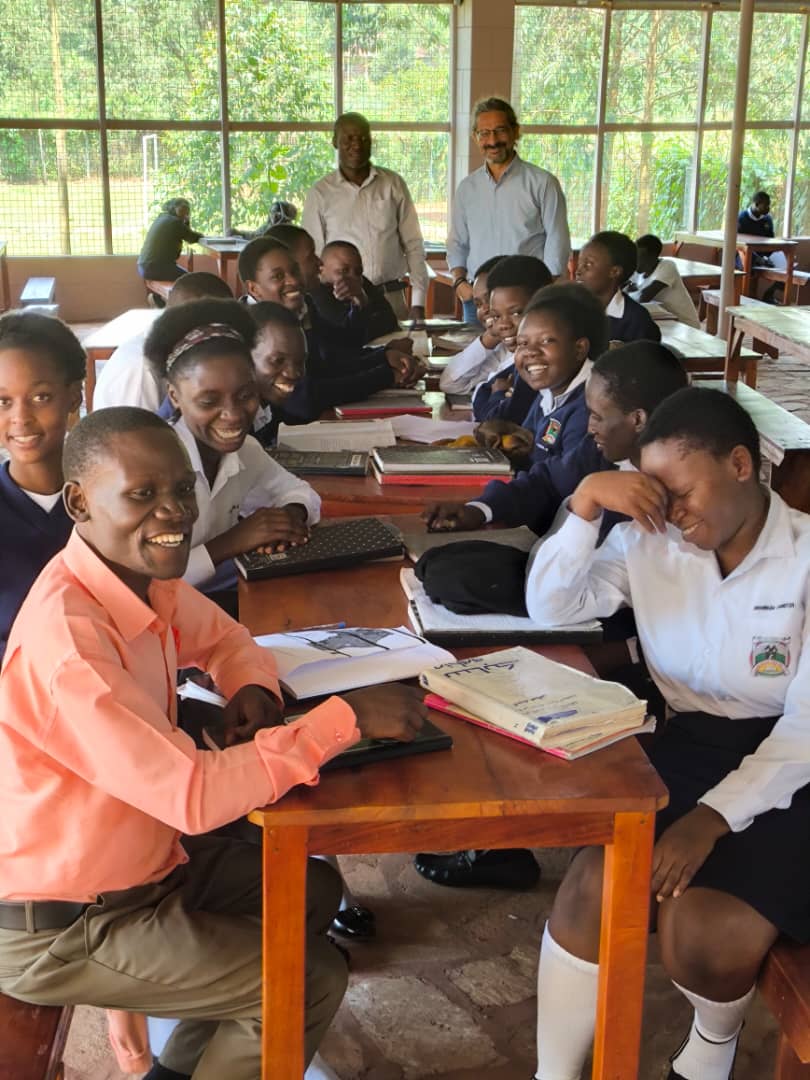
Ourintervention is unique because of its action-oriented training where participants form teams of between 9 to 12 individuals. The formed team identifies and evaluates new business opportunities, registers a business, gets a Tax Identification Number (Tin), acquires equipment and raw materials, deal with suppliers, and enter the market to offer their product or service to real customers. Further, each team acquires seed capital to start and run a micro-business for the 36 weeks of training. At the end of the training, teams declare keep the profit they make in their business and properly make accountability for the losses incurred.
Expected Project outcomes:
On successful completion of the training, a participant moves out with:
- Increased intention to undertake entrepreneurship activities
- Practical knowledge on how to start and manage a new business
- Increased awareness of entrepreneurship opportunities and challenges.
- Increased employability skills
- Knowledge and skills needed to create one’s own businesses
- Real-life business knowledge, skills and experiences, such as marketing, writing a business plan or registering your business
- A certificate of merit on successful completion of the training
- Entrepreneurial skills ready for use to succeed in self-employment and employment life
Course content: The training covers a broad spectrum of the entrepreneurship process ranging from; Identifying business opportunities, Planning and Implementing plans, Marketing, Leadership, Strategic Management, Finding Starting Capital, Managing Finances, Bookkeeping, Overcoming Barriers to entrepreneurship, Persuasion and Negotiation Skills, writing a business plan and registering a business, among others.
CAPACITY BUILDING OF PHD IN EDUCATION BY RESEARCH CANDIDATES IN UGANDA RESEARCH METHODOLOGY.
The effectiveness of doctoral programs in many African countries, including Uganda, has been compromised by systemic gaps in research training, particularly in the areas of advanced research methods. This is especially evident in PhD in Education by Research programs, where candidates often struggle to develop comprehensive, diverse research methodologies suited to the complexities of modern educational inquiries. These candidates often begin writing their research proposals based on the foundational skills they acquired during their Master’s coursework, which do not adequately prepare them for the rigor and complexity of PhD-level research.
Many PhD research supervisors in the country, who typically obtained their doctoral degrees through research with a focus on one particular research paradigm, tend to advise their students to adopt a similar research approach regardless of the research questions or the needs of the study. Consequently, candidates are restricted to working within a single research paradigm, limiting their ability to explore and apply multiple methodologies that are necessary for addressing diverse research problems. This lack of methodological versatility significantly hinders the quality of their dissertations and the overall outcomes of their research.
Moreover, when these candidates graduate, they face challenges in moderating vivas or marking theses that utilize research paradigms outside their own comfort zones or expertise. To address this gap, the Centre for Research in Pedagogy and Emerging Issues in Education offers a comprehensive, hands-on training in advanced qualitative, quantitative, and mixed methods, equipping you with the skills you need to conduct robust and diverse research.
Capacity Building and Community Out reaches:
We are seeking funding to undertake the following programmes:
Project Title: Rebuilding Resilience to Fight Situational Poverty Among Landslide Survivors through Livestock: A sustainable path out of poverty.
Uganda’s lush landscapes and rolling hills have long been a source of pride and beauty, but beneath the surface lies a deadly threat. Landslides have ravaged communities, sweeping away homes, livelihoods, and loved ones. Survivors are left to pick up the pieces, their lives forever changed by the devastating power of nature.
Resettlement is often touted as a solution for families displaced by landslides, but for many in Uganda, it’s a fate worse than the disaster itself. Even after being relocated to new areas, these families continue to suffer from poverty, lack of food, limited access to education, and inadequate healthcare facilities. The struggles begin from the moment they arrive at their new ‘home’, as it is characterized by inadequate housing because families are forced to live in makeshift shelters or cramped, poorly ventilated homes that offer little protection from dangerous elements, limited access to basic services as resettlement areas often lack functional schools, healthcare facilities, and clean water sources, exacerbating the vulnerabilities of displaced families.
“Rebuilding Resilience to Fight Situational Poverty among Landslide Survivors through Livestock: A sustainable path out of poverty” is an initiative that is intended to salvage the landslide survivors out of situational poverty by providing small scale dairy cows and the necessary support to start up their small-scale dairy farms for economic sustainability.
Project title: PEER TO PEER LEARNING IN LOWER PRIMARY SCHOOLS IN RURAL GOVERNMENT SCHOOLS IN UGANDA
Peer to peer learning is a learning methodology that improves students learning environment and learner achievements. Peer to peer learning is designed to address the issue of education stakeholders in rural government schools leaving all the learning to teachers and school setting only. The lack of additional effort outside of school causes the learners to obtain very little of the knowledge needed. Parents in this setting leave all the work to teachers who are already overwhelmed by the high teacher – pupil ratio and insufficient contextually relevant teaching – learning resources.
Peer to peer learning is designed to allow children to have peers who are better in class to conduct more learning tasks with their colleagues during weekends and holidays. It involves learners making groups of around five members who live in the same coming together and collaboratively learn or make research on a given task.
CREEP intends to design numeracy and literacy work books together with teachers of the learners in rural government schools. The proposed workbooks will contain tasks from classroom-based lessons. The workbooks will complement exercises and illustrations given by teachers and be a basis to test as well as improve comprehension levels of learners.
Model parents and village local council executives will be nominated to help in management of discipline of the children as they interact in their respective communities outside school.